

Can rainwater reach the waterproofing membrane in an inverted roof?
Yes. Water can pass through the joints between XPS boards and reach the waterproofing layer below. This behaviour should be considered when calculating the thermal performance and designing the complete inverted roof system.
GREEN INVERTED ROOF
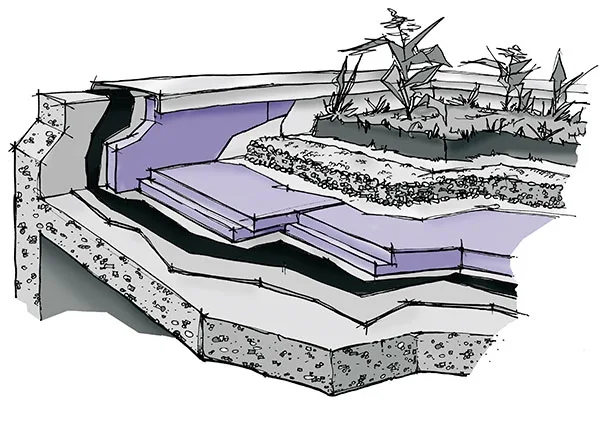
A green inverted roof, or garden roof, combines the principles of an inverted flat roof with a vegetated roof system. In this configuration, the waterproofing membrane is positioned below the thermal insulation, while the upper layers provide drainage, growing medium and vegetation. Placing the insulation above the waterproofing membrane helps protect the waterproofing layer […]
TREADABLE INVERTED ROOF OR FLAT ROOF
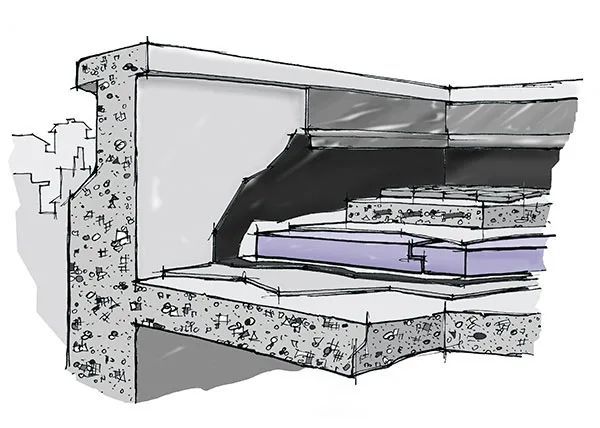
A treadable inverted roof is a flat-roof construction in which the thermal insulation is installed above the waterproofing membrane and the upper surface is designed to accommodate pedestrian use. As in other inverted roof systems, positioning the insulation above the waterproofing layer helps protect the membrane within the roof build-up. The insulation is subsequently covered […]
CARRIAGEABLE INVERTED ROOF OR PARKING ROOF
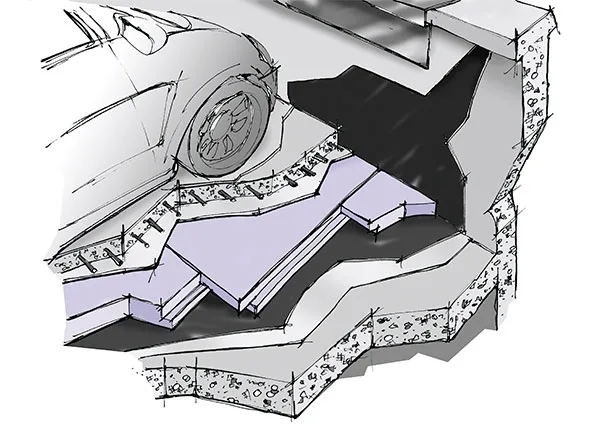
A carriageable inverted roof, or parking roof, is an accessible flat roof designed to accommodate vehicle traffic. As in other inverted roof systems, the thermal insulation is positioned above the waterproofing membrane, but the roof build-up must also withstand the significant mechanical loads generated by the paving system, vehicles and operational use. For this […]
Non-treadable inverted roof insulation
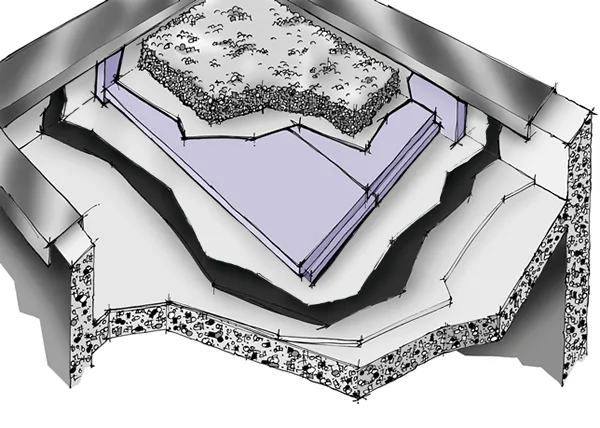
A non-treadable inverted roof is a flat-roof construction in which the thermal insulation is installed above the waterproofing membrane, reversing the conventional sequence of a warm roof. In this configuration, the waterproofing layer remains beneath the insulation and is therefore protected from direct exposure and temperature variations. Extruded polystyrene (XPS) is particularly suited to […]